•  
Tie-Dye Technique Of Bai Ethnic Group - Chin

Tie-Dye Technique Of Bai Ethnic Group - Chin

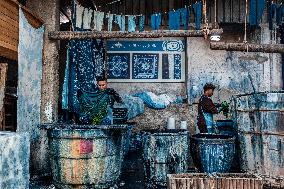
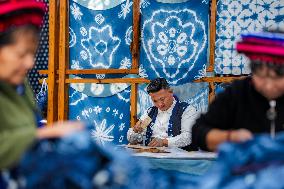
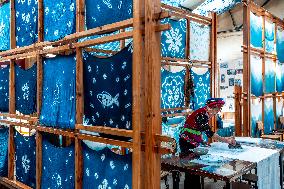
Duan Yuan, an inheritor of the tie-dye technique of Bai ethnic group, makes tie-dye designs in a dyehouse in Zhoucheng Village of Dali Bai Autonomous Prefecture, southwest China's Yunnan Province, November 21, 2025. Known as the hometown of the tie-dye technique of Bai ethnic group, Zhoucheng Village hosts over 200 households engaging in tie-dye businesses, with the number of employees exceeding 4,000. As a traditional folk technique of the Bai ethnic group, tie-dye boasts a history spanning over a thousand years and was included in the first batch of China's national intangible cultural heritage list in 2006. Tying and dyeing are the core steps in the process of making indigo tie-dye products. Artisans use needles and threads to create various patterns on the fabric, which are then dyed with plant-based dyes, resulting in blue backgrounds adorned with vivid white patterns. Photo by Hu Chao/Xinhua/ABACAPRESS.COM

  •  
Tie-Dye Technique Of Bai Ethnic Group - Chin

Tie-Dye Technique Of Bai Ethnic Group - Chin

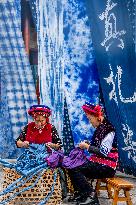
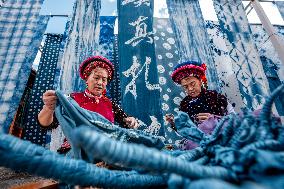
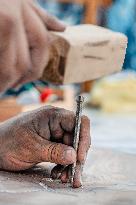
Duan Yinmei, an inheritor of the tie-dye technique of Bai ethnic group, creates knots on fabrics in a dyehouse in Zhoucheng Village of Dali Bai Autonomous Prefecture, southwest China's Yunnan Province, November 21, 2025. Known as the hometown of the tie-dye technique of Bai ethnic group, Zhoucheng Village hosts over 200 households engaging in tie-dye businesses, with the number of employees exceeding 4,000. As a traditional folk technique of the Bai ethnic group, tie-dye boasts a history spanning over a thousand years and was included in the first batch of China's national intangible cultural heritage list in 2006. Tying and dyeing are the core steps in the process of making indigo tie-dye products. Artisans use needles and threads to create various patterns on the fabric, which are then dyed with plant-based dyes, resulting in blue backgrounds adorned with vivid white patterns. Photo by Hu Chao/Xinhua/ABACAPRESS.COM

  •  
Tie-Dye Technique Of Bai Ethnic Group - Chin

Tie-Dye Technique Of Bai Ethnic Group - Chin

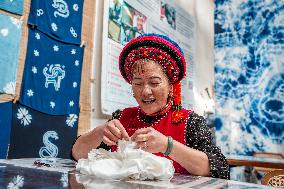
A woman experiences the tie-dye technique of Bai ethnic group in a dyehouse in Zhoucheng Village of Dali Bai Autonomous Prefecture, southwest China's Yunnan Province, November 21, 2025. Known as the hometown of the tie-dye technique of Bai ethnic group, Zhoucheng Village hosts over 200 households engaging in tie-dye businesses, with the number of employees exceeding 4,000. As a traditional folk technique of the Bai ethnic group, tie-dye boasts a history spanning over a thousand years and was included in the first batch of China's national intangible cultural heritage list in 2006. Tying and dyeing are the core steps in the process of making indigo tie-dye products. Artisans use needles and threads to create various patterns on the fabric, which are then dyed with plant-based dyes, resulting in blue backgrounds adorned with vivid white patterns. Photo by Hu Chao/Xinhua/ABACAPRESS.COM

  •  
Tie-Dye Technique Of Bai Ethnic Group - Chin

Tie-Dye Technique Of Bai Ethnic Group - Chin

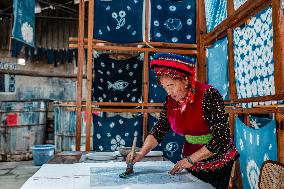
Duan Yinmei, an inheritor of the tie-dye technique of Bai ethnic group, dyes patterns on fabrics in a dyehouse in Zhoucheng Village of Dali Bai Autonomous Prefecture, southwest China's Yunnan Province, November 21, 2025. Known as the hometown of the tie-dye technique of Bai ethnic group, Zhoucheng Village hosts over 200 households engaging in tie-dye businesses, with the number of employees exceeding 4,000. As a traditional folk technique of the Bai ethnic group, tie-dye boasts a history spanning over a thousand years and was included in the first batch of China's national intangible cultural heritage list in 2006. Tying and dyeing are the core steps in the process of making indigo tie-dye products. Artisans use needles and threads to create various patterns on the fabric, which are then dyed with plant-based dyes, resulting in blue backgrounds adorned with vivid white patterns. Photo by Hu Chao/Xinhua/ABACAPRESS.COM

  •  
Tie-Dye Technique Of Bai Ethnic Group - Chin

Tie-Dye Technique Of Bai Ethnic Group - Chin

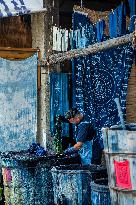
Duan Yuan, an inheritor of the tie-dye technique of Bai ethnic group, rinses dyed fabrics in a dyehouse in Zhoucheng Village of Dali Bai Autonomous Prefecture, southwest China's Yunnan Province, November 21, 2025. Known as the hometown of the tie-dye technique of Bai ethnic group, Zhoucheng Village hosts over 200 households engaging in tie-dye businesses, with the number of employees exceeding 4,000. As a traditional folk technique of the Bai ethnic group, tie-dye boasts a history spanning over a thousand years and was included in the first batch of China's national intangible cultural heritage list in 2006. Tying and dyeing are the core steps in the process of making indigo tie-dye products. Artisans use needles and threads to create various patterns on the fabric, which are then dyed with plant-based dyes, resulting in blue backgrounds adorned with vivid white patterns. Photo by Hu Chao/Xinhua/ABACAPRESS.COM

  •  
Tie-Dye Technique Of Bai Ethnic Group - Chin

Tie-Dye Technique Of Bai Ethnic Group - Chin

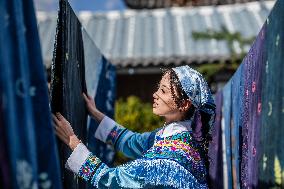
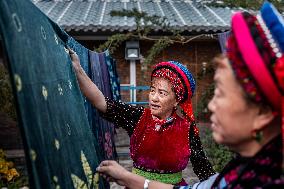
Duan Yinmei (L), an inheritor of the tie-dye technique of Bai ethnic group, and handicraftsman Duan Lilan dry tie-dye fabrics in a dyehouse in Zhoucheng Village of Dali Bai Autonomous Prefecture, southwest China's Yunnan Province, November 21, 2025. Known as the hometown of the tie-dye technique of Bai ethnic group, Zhoucheng Village hosts over 200 households engaging in tie-dye businesses, with the number of employees exceeding 4,000. As a traditional folk technique of the Bai ethnic group, tie-dye boasts a history spanning over a thousand years and was included in the first batch of China's national intangible cultural heritage list in 2006. Tying and dyeing are the core steps in the process of making indigo tie-dye products. Artisans use needles and threads to create various patterns on the fabric, which are then dyed with plant-based dyes, resulting in blue backgrounds adorned with vivid white patterns. Photo by Hu Chao/Xinhua/ABACAPRESS.COM

  •  
Tie-Dye Technique Of Bai Ethnic Group - Chin

Tie-Dye Technique Of Bai Ethnic Group - Chin

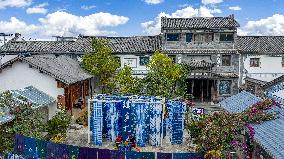
An aerial drone photo shows a scene at a dyehouse in Zhoucheng Village of Dali Bai Autonomous Prefecture, southwest China's Yunnan Province, November 21, 2025. Known as the hometown of the tie-dye technique of Bai ethnic group, Zhoucheng Village hosts over 200 households engaging in tie-dye businesses, with the number of employees exceeding 4,000. As a traditional folk technique of the Bai ethnic group, tie-dye boasts a history spanning over a thousand years and was included in the first batch of China's national intangible cultural heritage list in 2006. Tying and dyeing are the core steps in the process of making indigo tie-dye products. Artisans use needles and threads to create various patterns on the fabric, which are then dyed with plant-based dyes, resulting in blue backgrounds adorned with vivid white patterns. Photo by Hu Chao/Xinhua/ABACAPRESS.COM

  •  
Tie-Dye Technique Of Bai Ethnic Group - Chin

Tie-Dye Technique Of Bai Ethnic Group - Chin

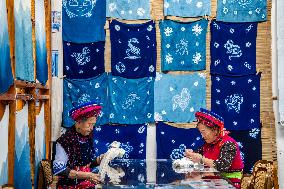
Duan Yinmei (L), an inheritor of the tie-dye technique of Bai ethnic group, and handicraftsman Duan Lilan untie knots on fabrics in a dyehouse in Zhoucheng Village of Dali Bai Autonomous Prefecture, southwest China's Yunnan Province, November 21, 2025. Known as the hometown of the tie-dye technique of Bai ethnic group, Zhoucheng Village hosts over 200 households engaging in tie-dye businesses, with the number of employees exceeding 4,000. As a traditional folk technique of the Bai ethnic group, tie-dye boasts a history spanning over a thousand years and was included in the first batch of China's national intangible cultural heritage list in 2006. Tying and dyeing are the core steps in the process of making indigo tie-dye products. Artisans use needles and threads to create various patterns on the fabric, which are then dyed with plant-based dyes, resulting in blue backgrounds adorned with vivid white patterns. Photo by Hu Chao/Xinhua/ABACAPRESS.COM

  •  
Tie-Dye Technique Of Bai Ethnic Group - Chin

Tie-Dye Technique Of Bai Ethnic Group - Chin

Duan Yinmei (L), an inheritor of the tie-dye technique of Bai ethnic group, and handicraftsman Duan Lilan untie knots on fabrics in a dyehouse in Zhoucheng Village of Dali Bai Autonomous Prefecture, southwest China's Yunnan Province, November 21, 2025. Known as the hometown of the tie-dye technique of Bai ethnic group, Zhoucheng Village hosts over 200 households engaging in tie-dye businesses, with the number of employees exceeding 4,000. As a traditional folk technique of the Bai ethnic group, tie-dye boasts a history spanning over a thousand years and was included in the first batch of China's national intangible cultural heritage list in 2006. Tying and dyeing are the core steps in the process of making indigo tie-dye products. Artisans use needles and threads to create various patterns on the fabric, which are then dyed with plant-based dyes, resulting in blue backgrounds adorned with vivid white patterns. Photo by Hu Chao/Xinhua/ABACAPRESS.COM

  •  
Tie-Dye Technique Of Bai Ethnic Group - Chin

Tie-Dye Technique Of Bai Ethnic Group - Chin

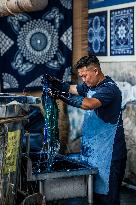
Duan Yuan (L), an inheritor of the tie-dye technique of Bai ethnic group, dyes fabrics in a dyehouse in Zhoucheng Village of Dali Bai Autonomous Prefecture, southwest China's Yunnan Province, November 21, 2025. Known as the hometown of the tie-dye technique of Bai ethnic group, Zhoucheng Village hosts over 200 households engaging in tie-dye businesses, with the number of employees exceeding 4,000. As a traditional folk technique of the Bai ethnic group, tie-dye boasts a history spanning over a thousand years and was included in the first batch of China's national intangible cultural heritage list in 2006. Tying and dyeing are the core steps in the process of making indigo tie-dye products. Artisans use needles and threads to create various patterns on the fabric, which are then dyed with plant-based dyes, resulting in blue backgrounds adorned with vivid white patterns. Photo by Hu Chao/Xinhua/ABACAPRESS.COM

  •  
Tie-Dye Technique Of Bai Ethnic Group - Chin

Tie-Dye Technique Of Bai Ethnic Group - Chin

Duan Yuan, an inheritor of the tie-dye technique of Bai ethnic group, makes tie-dye designs in a dyehouse in Zhoucheng Village of Dali Bai Autonomous Prefecture, southwest China's Yunnan Province, November 21, 2025. Known as the hometown of the tie-dye technique of Bai ethnic group, Zhoucheng Village hosts over 200 households engaging in tie-dye businesses, with the number of employees exceeding 4,000. As a traditional folk technique of the Bai ethnic group, tie-dye boasts a history spanning over a thousand years and was included in the first batch of China's national intangible cultural heritage list in 2006. Tying and dyeing are the core steps in the process of making indigo tie-dye products. Artisans use needles and threads to create various patterns on the fabric, which are then dyed with plant-based dyes, resulting in blue backgrounds adorned with vivid white patterns. Photo by Hu Chao/Xinhua/ABACAPRESS.COM

  •  
Tie-Dye Technique Of Bai Ethnic Group - Chin

Tie-Dye Technique Of Bai Ethnic Group - Chin

Duan Yuan, an inheritor of the tie-dye technique of Bai ethnic group, dyes fabrics in a dyehouse in Zhoucheng Village of Dali Bai Autonomous Prefecture, southwest China's Yunnan Province, November 21, 2025. Known as the hometown of the tie-dye technique of Bai ethnic group, Zhoucheng Village hosts over 200 households engaging in tie-dye businesses, with the number of employees exceeding 4,000. As a traditional folk technique of the Bai ethnic group, tie-dye boasts a history spanning over a thousand years and was included in the first batch of China's national intangible cultural heritage list in 2006. Tying and dyeing are the core steps in the process of making indigo tie-dye products. Artisans use needles and threads to create various patterns on the fabric, which are then dyed with plant-based dyes, resulting in blue backgrounds adorned with vivid white patterns. Photo by Hu Chao/Xinhua/ABACAPRESS.COM

  •  
Tie-Dye Technique Of Bai Ethnic Group - Chin

Tie-Dye Technique Of Bai Ethnic Group - Chin

Duan Yuan, an inheritor of the tie-dye technique of Bai ethnic group, dyes fabrics in a dyehouse in Zhoucheng Village of Dali Bai Autonomous Prefecture, southwest China's Yunnan Province, November 21, 2025. Known as the hometown of the tie-dye technique of Bai ethnic group, Zhoucheng Village hosts over 200 households engaging in tie-dye businesses, with the number of employees exceeding 4,000. As a traditional folk technique of the Bai ethnic group, tie-dye boasts a history spanning over a thousand years and was included in the first batch of China's national intangible cultural heritage list in 2006. Tying and dyeing are the core steps in the process of making indigo tie-dye products. Artisans use needles and threads to create various patterns on the fabric, which are then dyed with plant-based dyes, resulting in blue backgrounds adorned with vivid white patterns. Photo by Hu Chao/Xinhua/ABACAPRESS.COM

  •  
Tie-Dye Technique Of Bai Ethnic Group - Chin

Tie-Dye Technique Of Bai Ethnic Group - Chin

Duan Yuan, an inheritor of the tie-dye technique of Bai ethnic group, makes tie-dye designs in a dyehouse in Zhoucheng Village of Dali Bai Autonomous Prefecture, southwest China's Yunnan Province, November 21, 2025. Known as the hometown of the tie-dye technique of Bai ethnic group, Zhoucheng Village hosts over 200 households engaging in tie-dye businesses, with the number of employees exceeding 4,000. As a traditional folk technique of the Bai ethnic group, tie-dye boasts a history spanning over a thousand years and was included in the first batch of China's national intangible cultural heritage list in 2006. Tying and dyeing are the core steps in the process of making indigo tie-dye products. Artisans use needles and threads to create various patterns on the fabric, which are then dyed with plant-based dyes, resulting in blue backgrounds adorned with vivid white patterns. Photo by Hu Chao/Xinhua/ABACAPRESS.COM

  •  
Tie-Dye Technique Of Bai Ethnic Group - Chin

Tie-Dye Technique Of Bai Ethnic Group - Chin

Duan Yinmei, an inheritor of the tie-dye technique of Bai ethnic group, unties knots on fabrics in a dyehouse in Zhoucheng Village of Dali Bai Autonomous Prefecture, southwest China's Yunnan Province, November 21, 2025. Known as the hometown of the tie-dye technique of Bai ethnic group, Zhoucheng Village hosts over 200 households engaging in tie-dye businesses, with the number of employees exceeding 4,000. As a traditional folk technique of the Bai ethnic group, tie-dye boasts a history spanning over a thousand years and was included in the first batch of China's national intangible cultural heritage list in 2006. Tying and dyeing are the core steps in the process of making indigo tie-dye products. Artisans use needles and threads to create various patterns on the fabric, which are then dyed with plant-based dyes, resulting in blue backgrounds adorned with vivid white patterns. Photo by Hu Chao/Xinhua/ABACAPRESS.COM

  •  
Tie-Dye Technique Of Bai Ethnic Group - Chin

Tie-Dye Technique Of Bai Ethnic Group - Chin

Duan Yinmei, an inheritor of the tie-dye technique of Bai ethnic group, dyes patterns on fabrics in a dyehouse in Zhoucheng Village of Dali Bai Autonomous Prefecture, southwest China's Yunnan Province, November 21, 2025. Known as the hometown of the tie-dye technique of Bai ethnic group, Zhoucheng Village hosts over 200 households engaging in tie-dye businesses, with the number of employees exceeding 4,000. As a traditional folk technique of the Bai ethnic group, tie-dye boasts a history spanning over a thousand years and was included in the first batch of China's national intangible cultural heritage list in 2006. Tying and dyeing are the core steps in the process of making indigo tie-dye products. Artisans use needles and threads to create various patterns on the fabric, which are then dyed with plant-based dyes, resulting in blue backgrounds adorned with vivid white patterns. Photo by Hu Chao/Xinhua/ABACAPRESS.COM

  •  
Tie-Dye Technique Of Bai Ethnic Group - Chin

Tie-Dye Technique Of Bai Ethnic Group - Chin

Duan Yinmei (R), an inheritor of the tie-dye technique of Bai ethnic group, and handicraftsman Duan Lilan create knots on fabrics in a dyehouse in Zhoucheng Village of Dali Bai Autonomous Prefecture, southwest China's Yunnan Province, November 21, 2025. Known as the hometown of the tie-dye technique of Bai ethnic group, Zhoucheng Village hosts over 200 households engaging in tie-dye businesses, with the number of employees exceeding 4,000. As a traditional folk technique of the Bai ethnic group, tie-dye boasts a history spanning over a thousand years and was included in the first batch of China's national intangible cultural heritage list in 2006. Tying and dyeing are the core steps in the process of making indigo tie-dye products. Artisans use needles and threads to create various patterns on the fabric, which are then dyed with plant-based dyes, resulting in blue backgrounds adorned with vivid white patterns. Photo by Hu Chao/Xinhua/ABACAPRESS.COM

  •  
Mid-Autumn Festival Moon - China

Mid-Autumn Festival Moon - China

This aerial drone photo taken on October 6, 2025 shows people viewing the moon on a boat in Eryuan West Lake in Dali Bai Autonomous Prefecture, southwest China's Yunnan Province. Monday marks this year's Mid-Autumn Festival, which is celebrated annually on the 15th day of the eighth month in the Chinese lunar calendar. People across China admire the full moon to celebrate the traditional holiday. Photo by Luo Xincai/Xinhua/ABACAPRESS.COM

  •  
Mid-Autumn Festival Moon - China

Mid-Autumn Festival Moon - China

This aerial drone photo taken on October 6, 2025 shows people viewing the moon on a boat in Eryuan West Lake in Dali Bai Autonomous Prefecture, southwest China's Yunnan Province. Monday marks this year's Mid-Autumn Festival, which is celebrated annually on the 15th day of the eighth month in the Chinese lunar calendar. People across China admire the full moon to celebrate the traditional holiday. Photo by Luo Xincai/Xinhua/ABACAPRESS.COM

  •  

China: Dramatic Moment Huge Rocks From Landslide Crash Onto Mountain Road

A massive landslide hit a mountain road in Yunlong County, Yunnan, on August 13, sending huge rocks and mud crashing down and stranding vehicles. The collapse blocked the road, but no injuries were reported. The video captures the moment when debris, including a massive rock, slides down the slope, prompting children to run out of a vehicle to safety.

  •  
Yizu Dage Presentation in Yunnan - China

Yizu Dage Presentation in Yunnan - China

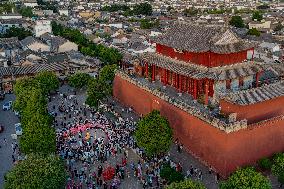
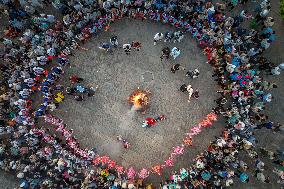
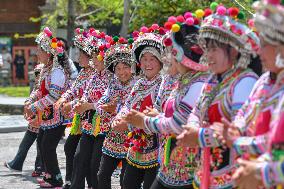
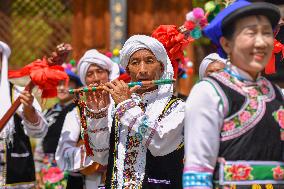
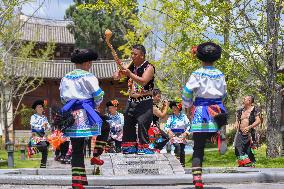
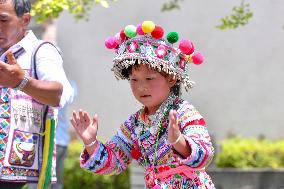
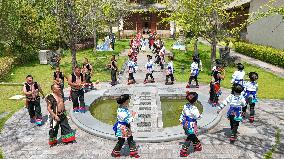
An aerial drone photo taken on July 18, 2025 shows a local Yizu Dage team performing during a parade show on a square in Weishan Yi and Hui Autonomous County, Dali Bai Autonomous Prefecture, southwest China's Yunnan Province. Yizu Dage, a traditional folk art of the Yi ethnic group usually performed during festivals, weddings, funerals and other gathering occasions, has a history of about 10 centuries and was listed as a national-level intangible cultural heritage in 2008. Weishan is dubbed "cradle of Yizu Dage." Provincial and prefecture authorities of Yunnan have rolled out policies and dedicated funds in support of the development and popularization of Dage art. To date, Dage art is not only integral part of local people's daily life, but also a major tourist attraction. Photo by Peng Yikai /Xinhua/ABACAPRESS.COM

  •  
Yizu Dage Presentation in Yunnan - China

Yizu Dage Presentation in Yunnan - China

An aerial drone photo taken on July 18, 2025 shows a local Yizu Dage team performing during a parade show on a square in Weishan Yi and Hui Autonomous County, Dali Bai Autonomous Prefecture, southwest China's Yunnan Province. Yizu Dage, a traditional folk art of the Yi ethnic group usually performed during festivals, weddings, funerals and other gathering occasions, has a history of about 10 centuries and was listed as a national-level intangible cultural heritage in 2008. Weishan is dubbed "cradle of Yizu Dage." Provincial and prefecture authorities of Yunnan have rolled out policies and dedicated funds in support of the development and popularization of Dage art. To date, Dage art is not only integral part of local people's daily life, but also a major tourist attraction. Photo by Peng Yikai /Xinhua/ABACAPRESS.COM

  •  
Yizu Dage Presentation in Yunnan - China

Yizu Dage Presentation in Yunnan - China

An aerial drone photo taken on July 18, 2025 shows a local Yizu Dage team performing during a parade show on the ancient street of Nanzhao in Weishan Yi and Hui Autonomous County, Dali Bai Autonomous Prefecture, southwest China's Yunnan Province. Yizu Dage, a traditional folk art of the Yi ethnic group usually performed during festivals, weddings, funerals and other gathering occasions, has a history of about 10 centuries and was listed as a national-level intangible cultural heritage in 2008. Weishan is dubbed "cradle of Yizu Dage." Provincial and prefecture authorities of Yunnan have rolled out policies and dedicated funds in support of the development and popularization of Dage art. To date, Dage art is not only integral part of local people's daily life, but also a major tourist attraction. Photo by Peng Yikai /Xinhua/ABACAPRESS.COM

  •  
Yizu Dage Presentation in Yunnan - China

Yizu Dage Presentation in Yunnan - China

An aerial drone photo taken on July 18, 2025 shows a local Yizu Dage team attending a rehearsal in Weishan Yi and Hui Autonomous County, Dali Bai Autonomous Prefecture, southwest China's Yunnan Province. Yizu Dage, a traditional folk art of the Yi ethnic group usually performed during festivals, weddings, funerals and other gathering occasions, has a history of about 10 centuries and was listed as a national-level intangible cultural heritage in 2008. Weishan is dubbed "cradle of Yizu Dage." Provincial and prefecture authorities of Yunnan have rolled out policies and dedicated funds in support of the development and popularization of Dage art. To date, Dage art is not only integral part of local people's daily life, but also a major tourist attraction. Photo by Peng Yikai /Xinhua/ABACAPRESS.COM

  •  
Yizu Dage Presentation in Yunnan - China

Yizu Dage Presentation in Yunnan - China

Members of a local Yizu Dage team attend a rehearsal in Weishan Yi and Hui Autonomous County, Dali Bai Autonomous Prefecture, southwest China's Yunnan Province, July 18, 2025. Yizu Dage, a traditional folk art of the Yi ethnic group usually performed during festivals, weddings, funerals and other gathering occasions, has a history of about 10 centuries and was listed as a national-level intangible cultural heritage in 2008. Weishan is dubbed "cradle of Yizu Dage." Provincial and prefecture authorities of Yunnan have rolled out policies and dedicated funds in support of the development and popularization of Dage art. To date, Dage art is not only integral part of local people's daily life, but also a major tourist attraction. Photo by Peng Yikai /Xinhua/ABACAPRESS.COM

  •  
Yizu Dage Presentation in Yunnan - China

Yizu Dage Presentation in Yunnan - China

Members of a local Yizu Dage team attend a rehearsal in Weishan Yi and Hui Autonomous County, Dali Bai Autonomous Prefecture, southwest China's Yunnan Province, July 18, 2025. Yizu Dage, a traditional folk art of the Yi ethnic group usually performed during festivals, weddings, funerals and other gathering occasions, has a history of about 10 centuries and was listed as a national-level intangible cultural heritage in 2008. Weishan is dubbed "cradle of Yizu Dage." Provincial and prefecture authorities of Yunnan have rolled out policies and dedicated funds in support of the development and popularization of Dage art. To date, Dage art is not only integral part of local people's daily life, but also a major tourist attraction. Photo by Peng Yikai /Xinhua/ABACAPRESS.COM

  •  
Yizu Dage Presentation in Yunnan - China

Yizu Dage Presentation in Yunnan - China

Members of a local Yizu Dage team attend a rehearsal in Weishan Yi and Hui Autonomous County, Dali Bai Autonomous Prefecture, southwest China's Yunnan Province, July 18, 2025. Yizu Dage, a traditional folk art of the Yi ethnic group usually performed during festivals, weddings, funerals and other gathering occasions, has a history of about 10 centuries and was listed as a national-level intangible cultural heritage in 2008. Weishan is dubbed "cradle of Yizu Dage." Provincial and prefecture authorities of Yunnan have rolled out policies and dedicated funds in support of the development and popularization of Dage art. To date, Dage art is not only integral part of local people's daily life, but also a major tourist attraction. Photo by Peng Yikai /Xinhua/ABACAPRESS.COM

  •  
Yizu Dage Presentation in Yunnan - China

Yizu Dage Presentation in Yunnan - China

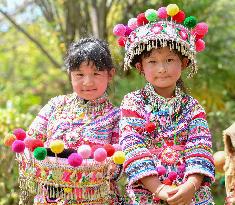
A young member of a local Yizu Dage team attends a rehearsal in Weishan Yi and Hui Autonomous County, Dali Bai Autonomous Prefecture, southwest China's Yunnan Province, July 18, 2025. Yizu Dage, a traditional folk art of the Yi ethnic group usually performed during festivals, weddings, funerals and other gathering occasions, has a history of about 10 centuries and was listed as a national-level intangible cultural heritage in 2008. Weishan is dubbed "cradle of Yizu Dage." Provincial and prefecture authorities of Yunnan have rolled out policies and dedicated funds in support of the development and popularization of Dage art. To date, Dage art is not only integral part of local people's daily life, but also a major tourist attraction. Photo by Peng Yikai /Xinhua/ABACAPRESS.COM

  •  
Yizu Dage Presentation in Yunnan - China

Yizu Dage Presentation in Yunnan - China

A drone photo taken on July 18, 2025 shows members of a local Yizu Dage team attending a rehearsal in Weishan Yi and Hui Autonomous County, Dali Bai Autonomous Prefecture, southwest China's Yunnan Province. Yizu Dage, a traditional folk art of the Yi ethnic group usually performed during festivals, weddings, funerals and other gathering occasions, has a history of about 10 centuries and was listed as a national-level intangible cultural heritage in 2008. Weishan is dubbed "cradle of Yizu Dage." Provincial and prefecture authorities of Yunnan have rolled out policies and dedicated funds in support of the development and popularization of Dage art. To date, Dage art is not only integral part of local people's daily life, but also a major tourist attraction. Photo by Peng Yikai /Xinhua/ABACAPRESS.COM

  •  
Yizu Dage Presentation in Yunnan - China

Yizu Dage Presentation in Yunnan - China

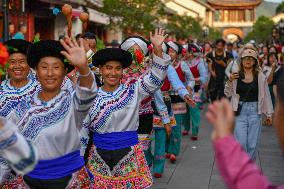
Members of a local Yizu Dage team wave to tourists during a parade show on the ancient street of Nanzhao in Weishan Yi and Hui Autonomous County, Dali Bai Autonomous Prefecture, southwest China's Yunnan Province, July 18, 2025. Yizu Dage, a traditional folk art of the Yi ethnic group usually performed during festivals, weddings, funerals and other gathering occasions, has a history of about 10 centuries and was listed as a national-level intangible cultural heritage in 2008. Weishan is dubbed "cradle of Yizu Dage." Provincial and prefecture authorities of Yunnan have rolled out policies and dedicated funds in support of the development and popularization of Dage art. To date, Dage art is not only integral part of local people's daily life, but also a major tourist attraction. Photo by Peng Yikai /Xinhua/ABACAPRESS.COM

  •  
Yizu Dage Presentation in Yunnan - China

Yizu Dage Presentation in Yunnan - China

Young members of a local Yizu Dage team take a break during practices in Weishan Yi and Hui Autonomous County, Dali Bai Autonomous Prefecture, southwest China's Yunnan Province, July 18, 2025. Yizu Dage, a traditional folk art of the Yi ethnic group usually performed during festivals, weddings, funerals and other gathering occasions, has a history of about 10 centuries and was listed as a national-level intangible cultural heritage in 2008. Weishan is dubbed "cradle of Yizu Dage." Provincial and prefecture authorities of Yunnan have rolled out policies and dedicated funds in support of the development and popularization of Dage art. To date, Dage art is not only integral part of local people's daily life, but also a major tourist attraction. Photo by Peng Yikai /Xinhua/ABACAPRESS.COM

  •  
Green Peafowl Nature Reserve - China

Green Peafowl Nature Reserve - China

An aerial drone photo taken on May 20, 2025 shows the Weishan Qinghua green peafowl provincial nature reserve near Kunming in the Bai Autonomous Prefecture of Dali, southwest China's Yunnan Province, May 20, 2025. Photo by Hu Chao/Xinhua/ABACAPRESS.COM

  •  
Green Peafowl Nature Reserve - China

Green Peafowl Nature Reserve - China

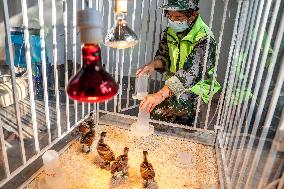
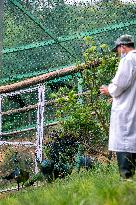
A staff member of Yunnan Forest Nature Center changes food and water for green peafowl chicks near Kunming in the Bai Autonomous Prefecture of Dali, southwest China's Yunnan Province, May 20, 2025. Photo by Hu Chao/Xinhua/ABACAPRESS.COM

  •  
Green Peafowl Nature Reserve - China

Green Peafowl Nature Reserve - China

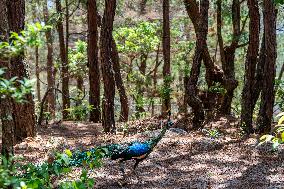
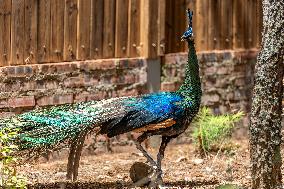
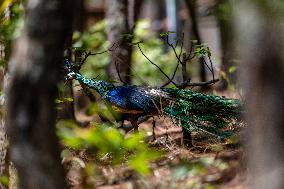
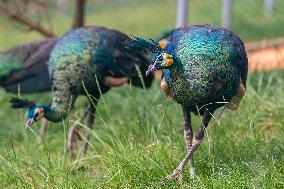
A captive-bred green peafowl is seen at the Weishan Qinghua green peafowl provincial nature reserve near Kunming in the Bai Autonomous Prefecture of Dali, southwest China's Yunnan Province, May 20, 2025. Photo by Hu Chao/Xinhua/ABACAPRESS.COM

  •  
Green Peafowl Nature Reserve - China

Green Peafowl Nature Reserve - China

A staff member of Yunnan Forest Nature Center feeds green peafowls near Kunming in the Bai Autonomous Prefecture of Dali, southwest China's Yunnan Province, May 20, 2025. Photo by Hu Chao/Xinhua/ABACAPRESS.COM

  •  
Green Peafowl Nature Reserve - China

Green Peafowl Nature Reserve - China

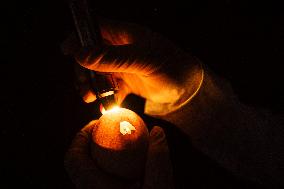
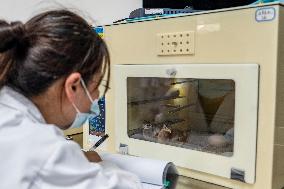
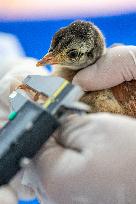
A staff member of Yunnan Forest Nature Center checks the condition of a green peafowl chick, who is about to break out of the shell, near Kunming in the Bai Autonomous Prefecture of Dali, southwest China's Yunnan Province, May 20, 2025. Photo by Hu Chao/Xinhua/ABACAPRESS.COM

  •  
Green Peafowl Nature Reserve - China

Green Peafowl Nature Reserve - China

A captive-bred green peafowl is seen at the Weishan Qinghua green peafowl provincial nature reserve near Kunming in the Bai Autonomous Prefecture of Dali, southwest China's Yunnan Province, May 20, 2025. Photo by Hu Chao/Xinhua/ABACAPRESS.COM

  •  
Green Peafowl Nature Reserve - China

Green Peafowl Nature Reserve - China

A panoramic drone photo taken on May 20, 2025 shows the Weishan Qinghua green peafowl provincial nature reserve near Kunming in the Bai Autonomous Prefecture of Dali, southwest China's Yunnan Province, May 20, 2025. Photo by Hu Chao/Xinhua/ABACAPRESS.COM

  •  
Green Peafowl Nature Reserve - China

Green Peafowl Nature Reserve - China

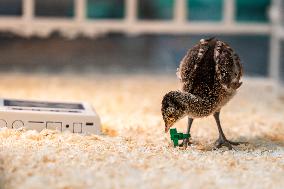
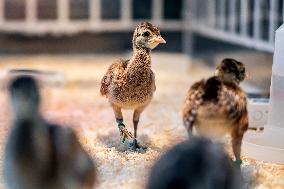
A green peafowl chick is seen at the Yunnan Forest Nature Center near Kunming in the Bai Autonomous Prefecture of Dali, southwest China's Yunnan Province, May 20, 2025. Photo by Hu Chao/Xinhua/ABACAPRESS.COM

  •  
Green Peafowl Nature Reserve - China

Green Peafowl Nature Reserve - China

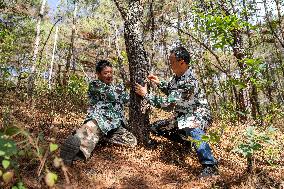
Staff members set an infrared camera at the Weishan Qinghua green peafowl provincial nature reserve near Kunming in the Bai Autonomous Prefecture of Dali, southwest China's Yunnan Province, May 20, 2025. Photo by Hu Chao/Xinhua/ABACAPRESS.COM

  •  
Green Peafowl Nature Reserve - China

Green Peafowl Nature Reserve - China

A captive-bred green peafowl is seen at the Weishan Qinghua green peafowl provincial nature reserve near Kunming in the Bai Autonomous Prefecture of Dali, southwest China's Yunnan Province, May 20, 2025. Photo by Hu Chao/Xinhua/ABACAPRESS.COM

  •  
Green Peafowl Nature Reserve - China

Green Peafowl Nature Reserve - China

A staff member of Yunnan Forest Nature Center checks the condition of green peafowl chicks near Kunming in the Bai Autonomous Prefecture of Dali, southwest China's Yunnan Province, May 20, 2025. Photo by Hu Chao/Xinhua/ABACAPRESS.COM

  •  
Green Peafowl Nature Reserve - China

Green Peafowl Nature Reserve - China

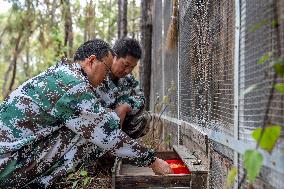
Staff members feed green peafowls with a drawer-shaped trough at the Weishan Qinghua green peafowl provincial nature reserve near Kunming in the Bai Autonomous Prefecture of Dali, southwest China's Yunnan Province, May 20, 2025. Photo by Hu Chao/Xinhua/ABACAPRESS.COM

  •  
Green Peafowl Nature Reserve - China

Green Peafowl Nature Reserve - China

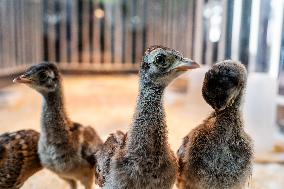
Green peafowl chicks are seen at the Yunnan Forest Nature Center near Kunming in the Bai Autonomous Prefecture of Dali, southwest China's Yunnan Province, May 20, 2025. Photo by Hu Chao/Xinhua/ABACAPRESS.COM

  •  
Green Peafowl Nature Reserve - China

Green Peafowl Nature Reserve - China

Green peafowl chicks are seen at the Yunnan Forest Nature Center near Kunming in the Bai Autonomous Prefecture of Dali, southwest China's Yunnan Province, May 20, 2025. Photo by Hu Chao/Xinhua/ABACAPRESS.COM

  •  
Green Peafowl Nature Reserve - China

Green Peafowl Nature Reserve - China

Green peafowls are seen at the Yunnan Forest Nature Center near Kunming in the Bai Autonomous Prefecture of Dali, southwest China's Yunnan Province, May 20, 2025. Photo by Hu Chao/Xinhua/ABACAPRESS.COM

  •  
Green Peafowl Nature Reserve - China

Green Peafowl Nature Reserve - China

A staff member of Yunnan Forest Nature Center checks the condition of a green peafowl chick near Kunming in the Bai Autonomous Prefecture of Dali, southwest China's Yunnan Province, May 20, 2025. Photo by Hu Chao/Xinhua/ABACAPRESS.COM

  •  
CHINA-YUNNAN-NEW FUNGUS SPECIES

CHINA-YUNNAN-NEW FUNGUS SPECIES

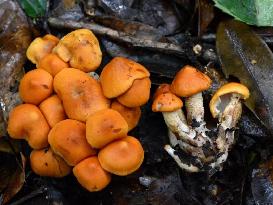
(240610) -- KUNMING, June 10, 2024 Photo by Xinhua/ABACAPRESS.COM) -- This undated photo shows Cystoderma yongpingense found in southwest China's Yunnan Province. Chinese researchers have discovered a new fungus species, Cystoderma yongpingense, in Yongping County of Dali Bai Autonomous Prefecture in southwest China's Yunnan Province. TO GO WITH "New fungus species found in SW China" (Kunming Edible Fungi Research Institute/Handout via Xinhua/ABACAPRESS.COM

  •  
#CHINA-EDUCATION-COLLEGE ENTRANCE EXAMINATION (CN)

#CHINA-EDUCATION-COLLEGE ENTRANCE EXAMINATION (CN)

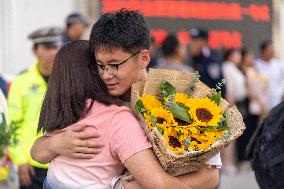
(240608) -- BEIJING, June 8, 2024 Photo by Xinhua/ABACAPRESS.COM) -- A student hugs his mother after the exam at a national college entrance examination site in Dali Bai Autonomous Prefecture, southwest China's Yunnan Province, June 8, 2024. China's annual national college entrance examination, also known as Gaokao, started on Friday. The exam in some regions has ended on Saturday. (Photo by Luo Xincai/Xinhua/ABACAPRESS.COM

  •  
#CHINA-EDUCATION-COLLEGE ENTRANCE EXAMINATION (CN)

#CHINA-EDUCATION-COLLEGE ENTRANCE EXAMINATION (CN)

(240608) -- BEIJING, June 8, 2024 (Xinhua) -- A student hugs his mother after the exam at a national college entrance examination site in Dali Bai Autonomous Prefecture, southwest China's Yunnan Province, June 8, 2024. China's annual national college entrance examination, also known as Gaokao, started on Friday. The exam in some regions has ended on Saturday. (Photo by Luo Xincai/Xinhua)

  • Main
  • Top
  • Editorial
  • Creative
  • About Us
  • About ILG
  • Terms of use
  • Company
  • BEHIND
  • Price List
  • Single Plan
  • Monthly Plan
  • Services
  • Shooting
  • Rights Clearance
  • Support
  • FAQ
  • How To Buy
  • Contact Us
  • Become a Partner

© KYODO NEWS IMAGES INC

All Rights Reserved.

  • Editorial
  • Olympics
  • News
  • Sports
  • Japan
  • Tech
  • Royal
  • Disaster
  • NorthKorea
  • Old Japan
  • SNS

  • Creative
  • Food
  • Japan
  • Landscape
  • Animal
  • Popular
  • #Ukraine
  • #China
  • #coronavirus
  • #N. Korea
  • #Thailand
  • #Russia
  • #Ukraine
  • #China
  • #coronavirus
  • #N. Korea
  • #Thailand
  • #Russia
  • Food
  • Japan
  • Landscape
  • Animal
  • Olympics
  • News
  • Sports
  • Japan
  • Tech
  • Royal
  • Disaster
  • NorthKorea
  • Old Japan
  • SNS